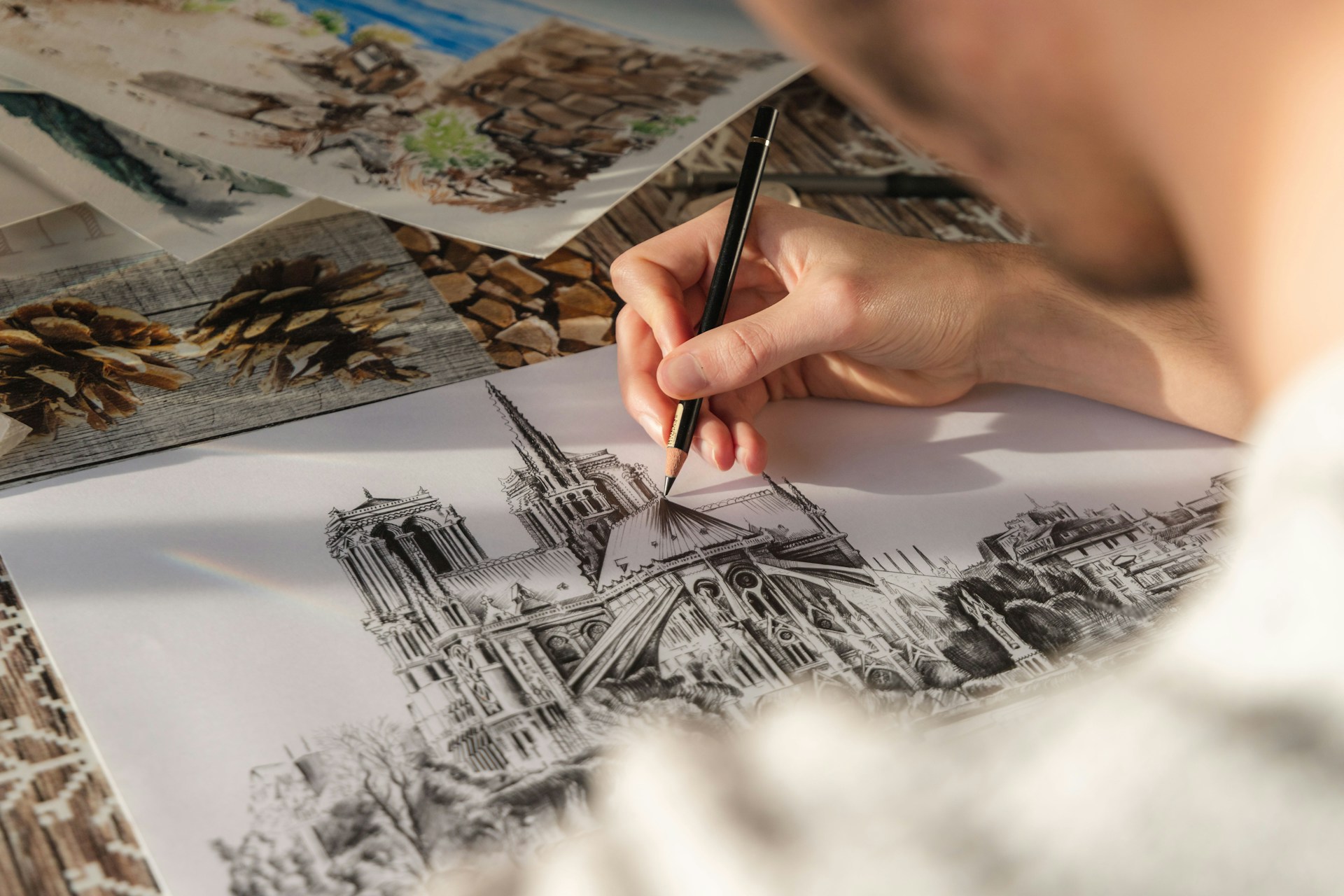
Long before digital tools changed the creative world, artists relied on paper, ink, paint, and carefully practiced skills to bring ideas to life. Those methods continue to influence how people draw, design, and communicate today. In fact, many creators study vintage drawing methods because they offer something that digital shortcuts cannot fully copy. Every line, brushstroke, and texture reflects a direct connection between the artist and the surface. Traditional illustration techniques also teach patience, observation, and control, which can strengthen almost any creative practice.
Although modern software makes editing faster, older approaches remain valuable because they focus on strong foundations. Artists had to understand light, form, proportion, composition, and materials before producing polished work. As a result, their images often carried a clear sense of purpose and personality. Today, these skills continue to inspire book covers, editorial pieces, packaging, posters, comics, and personal projects. By exploring how earlier creators worked, modern artists can discover practical lessons that feel just as useful now as they did generations ago.
Pencil Foundations Built Through Careful Observation
Pencil work often serves as the starting point for many classic creative processes. Before adding ink or color, artists usually develop their ideas through sketches. A pencil allows them to test proportions, adjust poses, study shadows, and explore different compositions without making permanent marks. Therefore, drawing becomes a process of discovery rather than a race toward a finished image.
Graphite also offers an impressive range of tones. Light pressure can create soft gray areas, while stronger pressure produces deep shadows and clear edges. Artists may also use hatching, cross-hatching, blending, and layered marks to build form. However, successful pencil work depends on more than technique. Careful observation matters just as much. When artists learn to study real objects, faces, clothing, and environments, they begin to understand how shapes interact in space.
Ink Work Developed Confidence and Character
Ink has played a major role in printed images for centuries. Unlike pencil, ink usually leaves little room for correction. Because of this, artists must make thoughtful decisions before placing each mark. That limitation can feel challenging at first. Still, it often helps artists develop confidence and create lines with stronger personality.
Different tools also produce different results. A fine pen can create controlled details, while a flexible nib can move from thin lines to thick strokes with a change in pressure. Brushes offer even more variation. Meanwhile, techniques such as stippling and cross-hatching allow artists to suggest texture, depth, and shadow without using color. These methods became especially important when printing technology could reproduce black-and-white images more easily than complex painted work.
Watercolor Created Light With Transparent Layers
Watercolor has remained popular because of its soft, luminous quality. Instead of covering the surface with thick pigment, artists often build color through transparent washes. The white paper beneath the paint reflects light through those layers. Consequently, watercolor images can feel bright, delicate, and full of movement.
However, watercolor requires planning because mistakes can be difficult to hide. Artists often begin with lighter areas and slowly add deeper tones. They may also leave parts of the paper untouched to create highlights. In addition, controlling the amount of water affects almost every result. A wet surface encourages soft edges and flowing color, while a dry surface allows sharper details. This balance between control and surprise gives watercolor much of its lasting appeal.
Engraving Turned Tiny Marks Into Rich Detail
Before modern printing became common, engraving allowed creators to reproduce detailed pictures for books, newspapers, maps, and other printed materials. Artists or skilled craftspeople cut lines into wood, metal, or similar surfaces. Printers then transferred the prepared image onto paper. The process required precision because every carved mark contributed to the final result.
Engraving also encouraged artists to think carefully about value and texture. Since they could not rely on smooth digital gradients, they used groups of lines to create shadows and depth. Closely spaced marks appeared darker, while wider gaps created lighter areas. As a result, simple lines could describe fabric, skin, clouds, buildings, and landscapes with remarkable detail. Modern creators can still learn from this disciplined approach to mark-making.
Gouache Brought Strength to Painted Surfaces
Gouache shares some qualities with watercolor, but it usually produces a more solid and opaque finish. Artists can place lighter paint over darker areas, which gives them greater freedom to make corrections and build strong shapes. Because of that flexibility, gouache became useful for advertising, editorial work, concept development, and many forms of commercial creativity.
The medium also supports bold color relationships. An artist can simplify a scene into clear areas of light, shadow, and color instead of rendering every tiny detail. This approach helps create strong compositions that remain easy to understand from a distance. Today, creators studying hand-painted artwork often return to gouache because it combines the physical character of paint with the ability to produce clean, graphic results.
Composition Guides Every Successful Scene
Strong materials alone cannot save a poorly arranged image. For that reason, classic creators spent considerable time thinking about composition. They decided where viewers should look first, how the eye should travel through the scene, and which elements deserved the most attention. These choices helped them communicate stories clearly even when an image contained many details.
Several basic ideas supported this process. Artists used contrast to separate important subjects from their surroundings. They also created balance by arranging large and small forms across the page. In addition, repeated shapes and directional lines could guide attention toward a central figure or object. These principles remain useful because human vision has not changed simply because creative tools have become digital.
Printed Pages Rewarded Texture and Restraint
Earlier printing systems placed practical limits on creators. Fine details could disappear, colors could shift, and certain tones could become difficult to reproduce. Instead of treating those limits only as problems, skilled artists learned to design around them. As a result, they developed clear silhouettes, controlled textures, and strong contrasts that reproduced well.
These restrictions often gave printed work a recognizable personality. Slight variations in ink, paper texture, and registration could make each image feel physical and alive. Furthermore, artists learned when to simplify rather than add more information. Modern designers can benefit from the same lesson. A successful image does not need endless detail. Sometimes a limited palette, a few strong shapes, and carefully chosen marks communicate an idea more effectively.
Creative Heritage Continues to Inspire New Generations
Studying older practices does not mean rejecting modern technology. Instead, heritage illustration styles can help creators understand where many current design habits began. A digital brush may imitate ink, graphite, or paint, but knowing how those materials behave in the physical world can improve the way an artist uses their digital versions. That knowledge encourages more thoughtful choices and reduces dependence on automatic effects.
Traditional illustration techniques continue to matter because they teach skills that remain useful across changing platforms. Observation improves drawing, composition strengthens communication, and material knowledge encourages experimentation. At the same time, working by hand can slow the creative process enough to make each decision more intentional. Whether artists work with pencils, brushes, printing tools, tablets, or a mix of several methods, classic practices provide a strong foundation for creating memorable images.